Sabtu, 10 Oktober 2015

Get Free Ebook Misquoting Jesus: The Story Behind Who Changed the Bible and Why, by Bart D. Ehrman

Get Free Ebook Misquoting Jesus: The Story Behind Who Changed the Bible and Why, by Bart D. Ehrman

The writer is actually wise to select words to make use of in making this book. The options of words are essential to develop a book. It will appertain to read by such particular societies. But among the developments of this book is that this publication is truly correct for each society. You may not hesitate to know nothing after reading this publication. Misquoting Jesus: The Story Behind Who Changed The Bible And Why, By Bart D. Ehrman can help you to discover numerous points after analysis.
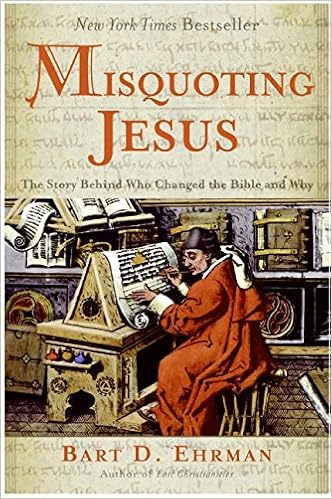
Misquoting Jesus: The Story Behind Who Changed the Bible and Why, by Bart D. Ehrman

Misquoting Jesus: The Story Behind Who Changed the Bible and Why, by Bart D. Ehrman


Misquoting Jesus: The Story Behind Who Changed the Bible and Why, by Bart D. Ehrman


Get Free Ebook Misquoting Jesus: The Story Behind Who Changed the Bible and Why, by Bart D. Ehrman

The supreme sales letter will offer you a distinct book to conquer you life to much greater. Book, as one of the recommendation to get lots of resources can be taken into consideration as one that will attach the life to the experience to the knowledge. By having book to read, you have aimed to connect your life to be much better. It will encourage your top quality not only for your life but additionally people around you.

As well as to advise you a better book with wonderful top quality, you can pick Misquoting Jesus: The Story Behind Who Changed The Bible And Why, By Bart D. Ehrman Why we refer this book for you? We know that you are now looking for the certified publication related to this subject. Hence, you can start it by getting this publication as one of the chosen analysis book. It is not about guide that is written by a very professional author or published by very popular publisher. This is about guide that is favourite one and impact for your requirements.

As pertaining to this referred publication, you may have understood why this book is awaited. However, for you who are still interested of the factors, you will certainly recognize he reasons when you start to check out guide. Looking at the cover of Misquoting Jesus: The Story Behind Who Changed The Bible And Why, By Bart D. Ehrman as well as review title will lead you recognize why many people falling in love. Fond of the book that related to the subject you are searching for can make you really feel satisfied. This is what will certainly make you load that wish.

From the explanation above, it is clear that you should review this publication Misquoting Jesus: The Story Behind Who Changed The Bible And Why, By Bart D. Ehrman We give the on-line publication entitled Misquoting Jesus: The Story Behind Who Changed The Bible And Why, By Bart D. Ehrman right here by clicking the link download. From shared book by online, you can offer a lot more perks for lots of people. Besides, the visitors will be additionally quickly to obtain the preferred publication Misquoting Jesus: The Story Behind Who Changed The Bible And Why, By Bart D. Ehrman to review. Discover the most preferred as well as needed publication Misquoting Jesus: The Story Behind Who Changed The Bible And Why, By Bart D. Ehrman to review now as well as below.

Misquoting Jesus: The Story Behind Who Changed the Bible and Why, by Bart D. Ehrman

From Booklist

The popular perception of the Bible as a divinely perfect book receives scant support from Ehrman, who sees in Holy Writ ample evidence of human fallibility and ecclesiastical politics. Though himself schooled in evangelical literalism, Ehrman has come to regard his earlier faith in the inerrant inspiration of the Bible as misguided, given that the original texts have disappeared and that the extant texts available do not agree with one another. Most of the textual discrepancies, Ehrman acknowledges, matter little, but some do profoundly affect religious doctrine. To assess how ignorant or theologically manipulative scribes may have changed the biblical text, modern scholars have developed procedures for comparing diverging texts. And in language accessible to nonspecialists, Ehrman explains these procedures and their results. He further explains why textual criticism has frequently sparked intense controversy, especially among scripture-alone Protestants. In discounting not only the authenticity of existing manuscripts but also the inspiration of the original writers, Ehrman will deeply divide his readers. Although he addresses a popular audience, he undercuts the very religious attitudes that have made the Bible a popular book. Still, this is a useful overview for biblical history collections. Bryce ChristensenCopyright © American Library Association. All rights reserved

Read more

Review

“Offers a fascinating look into the field of textual criticism and evidence that Scriptures have been altered.” (Charleston Post & Courier)“Whichever side you sit on regarding Biblical inerrancy, this is a rewarding read.” (Dallas Morning News)“One of the unlikeliest bestsellers of the year.” (Washington Post)“Misquoting Jesus is a godsend.” (Philadelphia Inquirer)

Read more

See all Editorial Reviews

Product details

Hardcover: 256 pages

Publisher: HarperOne; Later Printing edition (November 1, 2005)

Language: English

ISBN-10: 0060738170

ISBN-13: 978-0060738174

Product Dimensions:

6 x 0.9 x 9 inches

Shipping Weight: 1.1 pounds (View shipping rates and policies)

Average Customer Review:

4.3 out of 5 stars

987 customer reviews

Amazon Best Sellers Rank:

#44,826 in Books (See Top 100 in Books)

The author claims to be a leading authority on the Bible and the subtitle of this book is, "The story behind who changed the Bible and why". Here's are the core problems with this book: 1) The "Bible" wasn't changed; the ancient scriptures were changed by the Church to INVENT the thing we commonly know as "The Bible". 2) Ironically, the author believes in and tells his OWN STORIES—folklore...fairy tales—about "Jesus" that are NOT EVEN IN THE BIBLE. And you KNOW that when someone is on a first-name basis with "Jesus" that they are treating "Jesus" as a real name (which it is known that it is NOT, NOR IS "CHRIST"; they are descriptives)…and a real person…which raises the question: If "Jesus" is a real person and alive and well, why isn't "he" ruling the world instead of the Pope? He admits to being a former evangelical Christian/Bible fundamentalist who studied intensively at the "Moody Bible Institute" and was taught "salvation". Not a good start. There ARE a couple of small redeeming comments in the book, but he is definitely, NOT a "world-class biblical scholar"…only claiming to be…anyone can and does. ADDITIONALLY, my copy is missing text (sentences end in midstream) and repeating text: a very poor way to release a book, "HARPER".

Ehrman argues for two theses, one practical and one more abstract.The practical thesis can be summarized as: We do not possess any of the original writings of the New Testament, and the copies we have are riddled with negligent and/or intentional alterations. Therefore, the New Testament we read today, which is based upon numerous altered copies, is not very close to the original text. And if the original text is the Word of God, the Word of God is lost.The abstract thesis can be summarized as: For any text, both the author's and the reader's subjective beliefs and experiences condition the meaning of the words, and therefore color the interpretation of the text. As a result, there is no such thing as an objectively true interpretation of a text. The search for the "correct" meaning is fruitless. Therefore, no one can claim to know the true meaning of the text of the New Testament.The upshot? The New Testament we read today is of human, and not divine, origin (practical thesis), and, in any event, any claim to "the One True Interpretation" is in principle false (abstract thesis).I will not take a stand on Ehrman's claims but hope I've faithfully outlined them for people deciding whether to purchase the book. I am familiar with but not well-versed in either the New Testament or textual criticism. Nonetheless, I found his arguments and analysis easy to track. The broad historical information was interesting, and the biblical passages he focuses on to illustrate his points are engaging instead of arcane. Some may consider this book anti-religious, but Ehrman's tone is respectful and honest, not polemical. For such a short, accessible book, the reader can gain a lot from reading it.

A well written book about the evolution of the Bible, particularly the New Testament, and how our present text came to be in all its various forms. Dr. Ehrman begins with a brief summary of his own life. From an "ordinary kid" he becomes a fundamentalist Christian believing the Bible to be wholly inspired. During his graduate program in a Christian school he develops an interest in the wide variety of historical documents that have, through many generations come down to us a our present Bible. He becomes, in short, a textual-scholar, and has an epiphany!Ehrman quickly learns that there are no longer any "original texts" anywhere. The earliest texts found, more fragmented the farther back one goes, come from the 2nd century some 100 years after Jesus' death. None of the original Apostles, nor Paul are any longer alive at that point, and what early notes exist for geographically fragmented communities are already copies of lost originals. Even if the literal-original writing was "inspired by God" as fundamentalists claim, by the opening of the 2nd century the earliest copies of these writings have already passed through human hands and the real originals are no more. Except for the Christian community of Alexandria where professional scribes already existed, all of the early copies were made by amateur believers who, as it happened could read and write, and so copied texts for their congregations; sometimes well and sometimes poorly. It was not until late in the 4th century that more professional scribes assumed the copyist role.Roughly the first half of the book is taken up with the history of textual criticism. Ehrman leads us through early (17th century) classification attempts and the techniques developed to determine which texts were "more original" than others. Ehrman notes that in many many cases even that matter cannot be decided with any finality. That the modern obsession with the text began after the Reformation is no accident. Protestant scholars were far more compulsive about the text than Catholics. Protestant theology and doctrine rests entirely on the text, while Catholicism has its priestly class for precisely the task of interpreting the text in what ever form it takes. By the 18th century, scholars had identified some 30,000 textual variations in the manuscripts that come together as the then relatively stabilized New Testament.Most of these variations were simply mistakes made by non-professional copyists. Sometimes they left out a word or whole sentences. Sometimes what there were of literal originals were physically degraded even when first copied. Copyists sometimes had to "fill in the blanks", a smudged word, or a bleed-through from some earlier text on the page for example. So why not go back to the more professional Alexandrian texts and call those "closest to original"? Because while the vast majority of changes were copy errors, not all were merely that. Here and there changes were made for theological and socio-political reasons. In point of fact (something he does not mention) the Alexandrian scholars were among those who, by the early 5th Century, were considered among the heretical sects by the then solidifying Roman Church. Ehrman does not mention is the textual difference between the modern Western (Roman) and Eastern (Greek and Eastern European "Orthodox") churches. His aim is historical, and he does cover the early Greek texts whose alterations became mixed in with all of the others.In the second half of the book Ehrman covers three types of changes made deliberately by one group of copyists or another so as to make the text easier to read and better line up with the various theological opinions and social controversies of the time, each propounded by groups of believers who were doing their own copying! In the end, Ehrman is forced to conclude that even the lost originals were probably not autodidacts (texts dictated by God) because if God had wanted Christians to have his un-corrupted words in perpetuity, He would have made sure the originals survived.I gave the book 5 stars not because the book's subject was of great interest to me, but because Dr. Ehrman does such a marvelous job of treating a scholarly subject (many many references are provided) with easy to read language aimed at non-scholars of the subject like myself.

Misquoting Jesus: The Story Behind Who Changed the Bible and Why, by Bart D. Ehrman PDF
Misquoting Jesus: The Story Behind Who Changed the Bible and Why, by Bart D. Ehrman EPub
Misquoting Jesus: The Story Behind Who Changed the Bible and Why, by Bart D. Ehrman Doc
Misquoting Jesus: The Story Behind Who Changed the Bible and Why, by Bart D. Ehrman iBooks
Misquoting Jesus: The Story Behind Who Changed the Bible and Why, by Bart D. Ehrman rtf
Misquoting Jesus: The Story Behind Who Changed the Bible and Why, by Bart D. Ehrman Mobipocket
Misquoting Jesus: The Story Behind Who Changed the Bible and Why, by Bart D. Ehrman Kindle

Misquoting Jesus: The Story Behind Who Changed the Bible and Why, by Bart D. Ehrman PDF

Misquoting Jesus: The Story Behind Who Changed the Bible and Why, by Bart D. Ehrman PDF

Misquoting Jesus: The Story Behind Who Changed the Bible and Why, by Bart D. Ehrman PDF

Minggu, 04 Oktober 2015

Ebook Free

Ebook Free

. It is the moment to boost as well as revitalize your skill, knowledge as well as experience included some entertainment for you after long period of time with monotone things. Working in the workplace, visiting study, learning from examination and even more tasks could be completed as well as you should begin new points. If you feel so exhausted, why don't you attempt new thing? A quite easy point? Reading is exactly what we offer to you will understand. And also the book with the title is the referral currently.


Ebook Free

After becoming successful to complete reviewing a publication, have you sufficed? As a book fan, it will not suffice to review the book. Continue and also proceed! This is what you should do to boost and always create the expertise. Bok is one that will certainly make you feel addicted. However, it is in the favorable term. Discover guides that will give positive addition for you currently.

Do you require the literary works sources? Regulation or politics publications, religious beliefs, or scientific researches? Well, to confirm it, juts look for the title or theme that you require based upon the categories provided. However, previous, you are below in the good web site where we show the as one of your resources. Even this is not also known as much; you could understand and also comprehend why we actually advise you to read this following publication.

And exactly how this publication will influence you to do better future? It will certainly relate to exactly how the visitors will certainly obtain the lessons that are coming. As understood, frequently many people will certainly believe that reading can be an entry to get in the new assumption. The assumption will influence just how you tip you life. Even that is hard sufficient; individuals with high sprit might not really feel bored or give up recognizing that principle. It's exactly what will certainly provide the ideas for you.

When you are believing that this publication is likewise ideal for you, you should establish the time when you want to begin reading. In making the idea of the reading book, this publication can be starter point to lead you liking a publication, not just to present however additionally to read. Now, try to recognize it and also let your friends and family know about this publication and also site. You can educate to them that this website truly gives billion titles of books to review. So, accumulate and also get the features.

Product details

File Size: 22402 KB

Print Length: 384 pages

Publisher: For Dummies; 1 edition (December 15, 2017)

Publication Date: December 15, 2017

Sold by: Amazon Digital Services LLC

Language: English

ASIN: B078HXDWZ1

Text-to-Speech:

Enabled

P.when("jQuery", "a-popover", "ready").execute(function ($, popover) {

var $ttsPopover = $('#ttsPop');

popover.create($ttsPopover, {

"closeButton": "false",

"position": "triggerBottom",

"width": "256",

"popoverLabel": "Text-to-Speech Popover",

"closeButtonLabel": "Text-to-Speech Close Popover",

"content": '

' + "Text-to-Speech is available for the Kindle Fire HDX, Kindle Fire HD, Kindle Fire, Kindle Touch, Kindle Keyboard, Kindle (2nd generation), Kindle DX, Amazon Echo, Amazon Tap, and Echo Dot." + '
'

});

});

X-Ray:

Not Enabled

P.when("jQuery", "a-popover", "ready").execute(function ($, popover) {

var $xrayPopover = $('#xrayPop_2896CEF6443311E99789F10775ADDD11');

popover.create($xrayPopover, {

"closeButton": "false",

"position": "triggerBottom",

"width": "256",

"popoverLabel": "X-Ray Popover ",

"closeButtonLabel": "X-Ray Close Popover",

"content": '

' + "X-Ray is not available for this item" + '
',

});

});

Word Wise: Not Enabled

Lending: Not Enabled

Screen Reader:

Supported

P.when("jQuery", "a-popover", "ready").execute(function ($, popover) {

var $screenReaderPopover = $('#screenReaderPopover');

popover.create($screenReaderPopover, {

"position": "triggerBottom",

"width": "500",

"content": '

' + "The text of this e-book can be read by popular screen readers. Descriptive text for images (known as “ALT text”) can be read using the Kindle for PC app and on Fire OS devices if the publisher has included it. If this e-book contains other types of non-text content (for example, some charts and math equations), that content will not currently be read by screen readers. Learn more" + '
',

"popoverLabel": "The text of this e-book can be read by popular screen readers. Descriptive text for images (known as “ALT text”) can be read using the Kindle for PC app if the publisher has included it. If this e-book contains other types of non-text content (for example, some charts and math equations), that content will not currently be read by screen readers.",

"closeButtonLabel": "Screen Reader Close Popover"

});

});

Enhanced Typesetting:

Enabled

P.when("jQuery", "a-popover", "ready").execute(function ($, popover) {

var $typesettingPopover = $('#typesettingPopover');

popover.create($typesettingPopover, {

"position": "triggerBottom",

"width": "256",

"content": '

' + "Enhanced typesetting improvements offer faster reading with less eye strain and beautiful page layouts, even at larger font sizes. Learn More" + '
',

"popoverLabel": "Enhanced Typesetting Popover",

"closeButtonLabel": "Enhanced Typesetting Close Popover"

});

});

Amazon Best Sellers Rank:

#181,992 Paid in Kindle Store (See Top 100 Paid in Kindle Store)

After perusing several books devoted to the IPhone X I found the book for Dummies to be the easiest to understand. Although I'm a competent computer user, I needed more help with my new phone. Don't be mislead by the term "dumies", the writer does not talk down to you. If you are a new IPhone user or, like me, need a little help with new features this book will not disappoint.

Very well written book that covers the i-Phone X from A to Z. Love it.

This is a basic guide for beginners. Not too useful if you have ever used a smart phone.

Very informative and easy to follow. Covers what you need to use the features. A good start.

Not that easy to find what you need to know.

Excellent information. Very comprehensive. More “tips” than I will ever remember. Great reference book.

Very informative and easy to understand. The best book that I have read on how to use the iPone X

So so. Hard to follow.

PDF
EPub
Doc
iBooks
rtf
Mobipocket
Kindle

PDF

PDF

PDF
PDF

Rabu, 16 September 2015

Download Our America: A Hispanic History of the United States

Download Our America: A Hispanic History of the United States

Don't you assume that you need new way to lead your space time much worthier? Maintain onward with good routine. Reviewing is just one of the most effective recommendations for you. However, selecting the very best reading publication is also vital. It will certainly affect just how you will get the breakthroughs. It will certainly show you the quality of guide that you review. If you require the kind of book with top quality, you could pick Our America: A Hispanic History Of The United States Why should be this book? Come on follow us to understand why and also the best ways to get it.

Our America: A Hispanic History of the United States

Our America: A Hispanic History of the United States


Our America: A Hispanic History of the United States


Download Our America: A Hispanic History of the United States

Check out this really eye catching publication. From the title, from the choice of cover layout, as well as from the bold author to show, this is it the Our America: A Hispanic History Of The United States Still have no concepts with this publication? Are you truly a great viewers? Locate whole lots collections of the book composed by this very same author. You could see how the writer truly offers the work. Now, this book turns up in the posting world to be one of the current books to launch.

As we state, guide that we provide in the connect to download is the soft documents kinds. So, it will certainly allow you go out to seek for book. And now, to upgrade our collection, Our America: A Hispanic History Of The United States as the most recent publication coming is supplied. This is just one of the very best vendor books that originate from a professional publisher. Besides, the writer has raise the bundle of guide to be much interesting. It doesn't have to assume a growing number of to get every meaning kind this book.

A brand-new experience can be gained by reading a book Our America: A Hispanic History Of The United States Even that is this Our America: A Hispanic History Of The United States or various other publication collections. We offer this book because you can find more things to motivate your ability and also expertise that will certainly make you better in your life. It will be likewise beneficial for individuals around you. We recommend this soft file of guide right here. To recognize how you can get this book Our America: A Hispanic History Of The United States, learn more right here.

Getting this book in this site could not lead you to stroll as well as go to book store. Seeking rack by shelf will really invest your time mainly. However, it well not guarantees you to be effective searching for Our America: A Hispanic History Of The United States Hence, you can find it in the soft data of this publication. It will offer you the impressive system of the book suggestion. You can check out the link as well as go to the page to make deal with. And also currently, your book sift file of this can be your picked publication as well as place to read this fascinating publication.

Our America: A Hispanic History of the United States

Review

“A rich and moving chronicle…Perhaps the first history to make the case for this nation’s becoming a bright Latin American country.” - Julio Ortega, New York Times Book Review“Exceedingly well-written and engaging.” - Hector Tobar, Los Angeles Times“Triumphantly rescues Hispanic America from obscurity.” - The Economist“A valuable contribution to those seeking a broader understanding of U.S. history.” - Janet Napolitano, The Wall Street Journal“With a lucid, engaging style, [Fernández-Armesto] seeks to understand the continuity between the Spanish colonization and the fight for justice led by the Chicano movement in the sixties and by immigration advocates today…This is an invitation to look at America in full!” - Ilan Stavans, general editor of The Norton Anthology of Latino History“In enviably lyrical prose, Felipe Fernández-Armesto has written a bold and compelling synthesis of our nation’s Hispanic past, from the Spanish arrival in the late fifteenth century to the current and contentious debate over immigration reform. Marshaling famous and forgotten individuals and events, he reminds us that there is much more to America’s story than simply Massachusetts Pilgrims and Virginia Cavaliers.” - Andrew R. Graybill, director, Clements Center for Southwest Studies, Southern Methodist University

Read more

About the Author

Felipe Fernández-Armesto, the William P. Reynolds Professor of History at the University of Notre Dame, is the author of Pathfinders: A Global History of Exploration and Our America: A Hispanic History of the United States. He lives in South Bend, Indiana, and London.

Read more

Product details

Paperback: 416 pages

Publisher: W. W. Norton & Company; 1 edition (December 8, 2014)

Language: English

ISBN-10: 0393349829

ISBN-13: 978-0393349825

Product Dimensions:

5.5 x 1.2 x 8.2 inches

Shipping Weight: 11.2 ounces (View shipping rates and policies)

Average Customer Review:

4.0 out of 5 stars

43 customer reviews

Amazon Best Sellers Rank:

#275,225 in Books (See Top 100 in Books)

For all the people complaining about so-called immigrants and immigration, this book should be required reading. It might help settle down a discourse that isn't based on any factual knowledge.Now, that's not the slant of this book. That's just my opinion. Sadly, the author believes that the wave of anti-immigration legislation is waning, but that's not my perception; just read the posts following any blog or article on the whole immigration issue. In my view, the issue remains quite volatile in this country.The author, on the other hand, taps into the evolution of Hispanic America and its intermingling with the other cultures that have been here, past and present. As he points out, we can't focus on one group of people---in this case, Hispanics---without looking at the overlap of Anglo, Native American, African American, etc.Living in New Mexico, we sometimes like to think that Hispanic America started here and branched outward. Granted, one cannot ignore the role that this region of the country has played in Hispanic/Mexican/Spanish history. In contrast to most other areas of the country, these ties are still quite strong, such that our State constitution is written in English and Spanish; 50+ % of the people in the state speak Spanish on a regular basis; most residents can trace their family origins to Mexico or Spain; and our cuisine reflects the blending of ingredients that have come from regions near and far.This book, however, reminds us that there is more to Hispanic America than what has been happening in New Mexico for 400+ years. Rather, many other states---mostly border or coastal---have also played an instrumental role. Most recently, this has been through Mexican immigration, though the role of the Cuban in this culture is adequately addressed in the book.This book is well-researched/referenced, with a good number of anecdotes from those who live here. Religion doesn't come out looking too good in this volume, but then, isn't that the root cause of many of the problems with multiculturalism, here or anywhere else in the world.Christopher Alexander[...]

While this book will evoke much resonance for its contemporaneity, its good sense, it is an historical provocationof the first order; it is the wealth of historical detail which appeals to this reader. For instance, when the Jesuits were expelled from Spanish lands in 1767, "The Baja was virtually a Jesuit republic. The expulsion...deprived the monarchy of its most determined frontiersmen"(112). The ways in which accommodation were reached between brothers and indios are multiple; for instance, while the brothers were strict enough on sexaul matters, locking up Indian girls, they were more indulgent on indifferent traditions like dancing and traditional healing" (115). The towns around the missions grew little in the late 18C, partly because of the indios' desire for their former hunting life, partly because farming brought better diet, fattening and sickening. (Hmm.. Is that an historical or a 21st C point?) And the internecine struggles between secular administrators and the monasteries provide fruitful accounts ofhuman individualities and differences. For instance, it must have proven difficult to impress Fray Jose Maria Zalvidea, who "constantly flogged himself, wore hairshirt, and drove nails into his feet." Others had spasms of drunkenness and lunacy, perhaps indistinguishable. Meanwhile, some administrators threatened to take away the mission lands (which they had by royal grant) and authority, including their right to confirm baptized indios. Seems like England's Henry VIII was not alone in considering the acquisition of institutions built by the enticements and amalgamations of the religious.

This is one of the most thought-provoking books about the USA in years. Let's start with the author. His father is from Spain (Galicia) and his mother is English. He grew up in Britain and was educated there, and has taught at American universities. He is therefore bicultural, both English and Spanish, and his perspective is about as unique as you can get. He is a brilliant historian, apparently a good teacher, and an extremely good writer. He writes as an American immigrant, as an historian, and as an Hispanic. His purpose in writing is to throw light on the changing Hispanic influence on the USA.The book really has three parts. The first details Spanish--not Mexican--exploration and settlement. In much of what is now the United States, the Spanish were here first, sometimes longest and most intensively. By that measure, we are historically Hispanic. He discusses California (one of his most interesting sections), explored and finally settled by the Spanish. So with New Mexico. Texas and Arizona too, but smaller populations. Those places were Hispanic and therefore...well you see the point. The intense and long duration of Spanish presence in parts of what is now the United States is usually glossed over, and many see Hispanics as invaders (when the Anglos were the invaders, in Florida for example). There are also parts of the USA that we forget have a long Spanish presence--Puerto Rico, Guam. He is absolutely convincing on the historic Hispanic presence. At the same time, he has a wonderful take on the settlement of the British colonies. The argument is that the British colonies expanded to the west and the Hispanics to the north, and where the two crossed is a fertile and contentious ground for conflict and cross-fertilization.A second part, not really sequential, is the experience of Hispanics in the USA until recent times. The treaty ending the Mexican War guaranteed citizenship and rights for Hispanics who did not wish to leave for Mexico. These people were systematically hounded out of their land, denied representation and denied opportunity, sometimes by fraud and sometimes by lynching and other means of terror, particularly in Texas. The need for labor, the legacy Hispanic populations and politics in Mexico are all part of an extremely complicated social history involving the Southwest particularly. Hispanics were treated quite as badly as African Americans were, and were subject to the same institutional racism that denied equal access, and caused such horrific episodes as mandatory sterilization for some caught up in the criminal system. He details the struggle for equal rights, in a fascinating section. Note that it is by no means that Anglos are the bad guys and Hispanics in the white hats. In one section of some length, he explores the Mormon experience, extremely positive on that historical experience.The third part looks at current trends and Hispanics in the later 20th century and in this new century. Hispanics have always been here, and immigration is vastly increasing the population, but now most of the increase is the children of the initial waves. Perhaps 60% have their origin in Mexico--but millions originate and millions still live in Hispanic United States, in Puerto Rico, American now for well over 100 years.The book ends with what really is a separate essay. He looks at the idea of the Protestant work ethic a la Max Weber, and systematically demolishes it. His point is that much of what is usually identified as distinctly American is not, and is simply a variation on common themes existing in all the American nations. He does present a strongly favorable account of Catholicism, not to denigrate US Protestants, but to correct a number of baleful assumptions about Catholic immigrants. He notes that the vaunted American individualism exists, but that the community and even communitarian impulse is just as strong, and that most people in the USA participate in groups of many kinds. I suspect it is this section that has caused those extremely negative reviews several readers have written. This book is not an apologia for Catholicism. It does not claim the USA should be returned to Mexico. He's also not optimistic about the prospect of Spanish surviving. The Hispanic portion of the USA. a hundred million by mid century, is likely to speak English, be increasingly Protestant and be thoroughly Americanized. And in my opinion, that bodes extremely well for this country of mine. And his. And my/his country is multi-cultural, not just a melding of Hispanic and Anglo, but Asian, African American, Indian and the others we will be fortunate to have as new citizens.This is not an easy read. But the subject is surpassingly important. You'll find out a lot of things, some trivial, some key, some sad, some joyful. But read the book!

Our America: A Hispanic History of the United States PDF
Our America: A Hispanic History of the United States EPub
Our America: A Hispanic History of the United States Doc
Our America: A Hispanic History of the United States iBooks
Our America: A Hispanic History of the United States rtf
Our America: A Hispanic History of the United States Mobipocket
Our America: A Hispanic History of the United States Kindle

Our America: A Hispanic History of the United States PDF

Our America: A Hispanic History of the United States PDF

Our America: A Hispanic History of the United States PDF

Jumat, 28 Agustus 2015

Ebook Renewing The Mind 101: A Practical Guide and Devotional

Ebook Renewing The Mind 101: A Practical Guide and Devotional

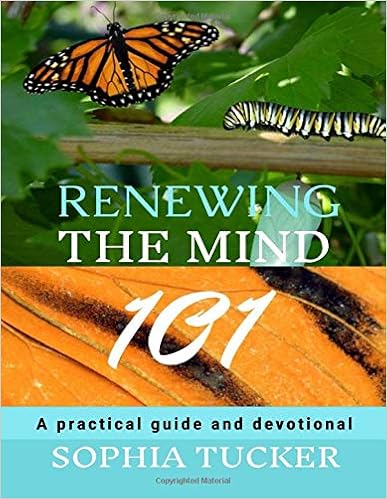
Getting this publication in this site could not lead you to walk as well as most likely to publication store. Looking for shelf by rack will truly invest your time mainly. But, it well not assurances you to be successful searching for Renewing The Mind 101: A Practical Guide And Devotional Hence, you can locate it in the soft documents of this publication. It will provide you the amazing system of the book recommendation. You can visit the link as well as go to the web page to make take care of. As well as now, your book sort data of this can be your picked publication as well as area to read this interesting publication.

Renewing The Mind 101: A Practical Guide and Devotional

Renewing The Mind 101: A Practical Guide and Devotional


Renewing The Mind 101: A Practical Guide and Devotional


Ebook Renewing The Mind 101: A Practical Guide and Devotional

Locate many more experiences as well as abilities by reviewing Renewing The Mind 101: A Practical Guide And Devotional This book ends up being a book that you truly need currently, don't you? Are you still assuming that analysis is nonsense activity? Exactly how silly, when many people are beginning to find out about numerous things, will you remain permanently with no development? This is just what you will do to be the much better person?

This is not type of normal book. It offers you amazing web content to acquire the ideas. Next to, the existence of this publication will lead you to always feel far better. You may not should produce or invest more time to go; the Renewing The Mind 101: A Practical Guide And Devotional can be obtained from the soft data. Yeah, as this is an online collection, you could find numerous kinds and genres of the books based on the styles that you truly need.

Sooner you obtain the e-book Renewing The Mind 101: A Practical Guide And Devotional, faster you could take pleasure in reading guide. It will certainly be your count on maintain downloading the book Renewing The Mind 101: A Practical Guide And Devotional in offered web link. This way, you can truly making a decision that is offered to obtain your very own book on-line. Here, be the first to obtain the book entitled Renewing The Mind 101: A Practical Guide And Devotional and also be the first to recognize how the writer suggests the message and also understanding for you.

Yeah, the material of this publication includes very easy words, very easy language designs, and also easy sensation to comprehend. When you have found this advised book to review, one to do is only by checking it in the link and also get it. You have to start as soon as possible since there are also many individuals that have actually got and also checked out Renewing The Mind 101: A Practical Guide And Devotional So, you will not be left back to recognize more about this book web content.

Renewing The Mind 101: A Practical Guide and Devotional

Product details

Paperback: 267 pages

Publisher: Independently published (March 9, 2019)

Language: English

ISBN-10: 1798976005

ISBN-13: 978-1798976005

Product Dimensions:

8.5 x 0.6 x 11 inches

Shipping Weight: 1.7 pounds (View shipping rates and policies)

Average Customer Review:

Be the first to review this item

Amazon Best Sellers Rank:

#374,390 in Books (See Top 100 in Books)

Renewing The Mind 101: A Practical Guide and Devotional PDF
Renewing The Mind 101: A Practical Guide and Devotional EPub
Renewing The Mind 101: A Practical Guide and Devotional Doc
Renewing The Mind 101: A Practical Guide and Devotional iBooks
Renewing The Mind 101: A Practical Guide and Devotional rtf
Renewing The Mind 101: A Practical Guide and Devotional Mobipocket
Renewing The Mind 101: A Practical Guide and Devotional Kindle

Renewing The Mind 101: A Practical Guide and Devotional PDF

Renewing The Mind 101: A Practical Guide and Devotional PDF

Renewing The Mind 101: A Practical Guide and Devotional PDF

Minggu, 09 Agustus 2015

Download PDF , by N. T. Wright

Download PDF , by N. T. Wright

Now, you could recognize well that this book is mainly suggested not only for the viewers that love this subject. This is additionally promoted for all people and public type culture. It will not limit you to read or not guide. However, when you have actually started or started to review DDD, you will understand why precisely guide will give you al favorable points.

, by N. T. Wright

, by N. T. Wright


, by N. T. Wright


Download PDF , by N. T. Wright

Just what do you believe to conquer your trouble required currently? Reviewing a book? Yes, we agree with you. Book is one of the actual sources and also amusement resources that will certainly be always discovered. Several book shops additionally use and also offer the collections books. However the shops that offer the books from other nations are uncommon. For this reason, we are below in order to help you. We have the book soft documents links not only from the nation but also from outdoors.

After getting such information from us about this publication what should you do? One more time, this is an ideal book that is written especially for you, the person who likes reading so much. You are the viewers with big curiosity as well as you will certainly not quit of a publication. , By N. T. Wright truly exactly what you require currently. You may not be unusual with this title of guide, may not you? It is not the time that you will certainly quit to complete. You could finish it every time you desire.

So why do you need to read this book? The response is really simple. This book is very appropriate to just what you should get currently. This publication will certainly help you to resolve the problem that happens today. By reading this book, you could make certain to on your own what to do more. As understood, reading is likewise well known as a very important task to do, by everybody. Never afraid to take new activity in your life!

, by N. T. Wright

Product details

File Size: 2612 KB

Print Length: 558 pages

Publisher: Fortress Press; 1st North American edition (January 1, 1992)

Publication Date: November 16, 2012

Sold by: Amazon Digital Services LLC

Language: English

ASIN: B00B1VG66Y

Text-to-Speech:

Enabled

P.when("jQuery", "a-popover", "ready").execute(function ($, popover) {

var $ttsPopover = $('#ttsPop');

popover.create($ttsPopover, {

"closeButton": "false",

"position": "triggerBottom",

"width": "256",

"popoverLabel": "Text-to-Speech Popover",

"closeButtonLabel": "Text-to-Speech Close Popover",

"content": '

' + "Text-to-Speech is available for the Kindle Fire HDX, Kindle Fire HD, Kindle Fire, Kindle Touch, Kindle Keyboard, Kindle (2nd generation), Kindle DX, Amazon Echo, Amazon Tap, and Echo Dot." + '
'

});

});

X-Ray:

Not Enabled

P.when("jQuery", "a-popover", "ready").execute(function ($, popover) {

var $xrayPopover = $('#xrayPop_C9BF3516430C11E9BAC1E6977FAF5343');

popover.create($xrayPopover, {

"closeButton": "false",

"position": "triggerBottom",

"width": "256",

"popoverLabel": "X-Ray Popover ",

"closeButtonLabel": "X-Ray Close Popover",

"content": '

' + "X-Ray is not available for this item" + '
',

});

});

Word Wise: Enabled

Lending: Not Enabled

Enhanced Typesetting:

Enabled

P.when("jQuery", "a-popover", "ready").execute(function ($, popover) {

var $typesettingPopover = $('#typesettingPopover');

popover.create($typesettingPopover, {

"position": "triggerBottom",

"width": "256",

"content": '

' + "Enhanced typesetting improvements offer faster reading with less eye strain and beautiful page layouts, even at larger font sizes. Learn More" + '
',

"popoverLabel": "Enhanced Typesetting Popover",

"closeButtonLabel": "Enhanced Typesetting Close Popover"

});

});

Amazon Best Sellers Rank:

#57,481 Paid in Kindle Store (See Top 100 Paid in Kindle Store)

In the closing pages of this remarkable book, the author writes on the question of God (or god, for which he makes the case in the Preface) -- the meaning of the word ‘god’ lies at the heart of his preceding account of first-century communities, mainly Jews and Christians but also various pagan factions. Reviewing briefly their competing claims, he says, “There is no neutral ground here. We are at the level of worldview, and here ultimate choices are involved.”The New Testament and the People of God introduces a grand multi-volume project carrying the overall title, Christian Origins and the Question of God; but it can stand on its own as a work worthy of close examination. Author N. T. Wright, theologian, historian and at one time Bishop of Durham, mentions here and there that he could not go into full detail in a book of this scope, yet the study is surprisingly thorough in setting the stage for the following volumes. Looking forward, he explains the need to apply three disciplines in the study of the NT: literary, historical and theological, which he seeks to integrate, even as he recognizes that one or another may be the main applicable discipline, supplemented by the other two. Thus, “In a sense, the study of Jesus is first and foremost a matter of history, needing careful ancillary use of literary study of the texts and theological study of the implications.” Or, “the study of Paul is a matter of theology, needing careful ancillary historical and literary work.” And, “studying the gospels in their own right is first and foremost a literary task, but it cannot be done without careful attention to the historical and theological setting, context and implications.”Before going into the core of the book, the parts dealing respectively with first-century Judaism and the first Christian century, readers would do well to heed Wright’s advice in the preceding section: “Those who are eager to get on with what they see as the real business are, of course, welcome to skip this section, but they must not mind if by doing so they run into puzzles at a later stage.” Here he discusses: the variety and problems of knowledge and his adoption of critical realism as his favored approach; the crucial role of stories as an expression of the all-important worldviews of communities -- worldview being the lens through which people perceive reality; the analysis of narratives (following the work of Griemas); the interplay within worldviews of stories, cultural symbols, social conventions and practice, and the answers to existential questions (who are we, where are we, what is wrong, what is the solution?); the impossibility of “mere history”, all history being interpreted history; and the interrelation of worldview and theology, as he argues that “worldviews are in fact, from one point of view, profoundly *theological*” (author's emphasis). I have selectively gleaned these highlights from more than a hundred packed pages that aim to arm the careful reader with the necessary background for an intelligent reading of the rest of the book.In the next and longest part of the book, we see all these ideas and elements at play, as the author sketches the history of Israel from the Babylonian exile to the destruction of the second temple by the Romans, describes the diverse outlooks of first-century Judaism within the Greco-Roman world, and writes with considerable detail of Israel’s beliefs and hopes. He starts by asserting the necessity of the task: “To understand the origins of Christianity, and the terms in which the question of god was posed and answered within it … we must gain as accurate an understanding as possible of the Judaism(s) in which Jesus and Paul grew up, and to which they related in various ways during their active ministries.” As he tells it, worldview takes center stage. First-century Judaism’s main feature was a worldview that encompassed all aspects of reality, with a focus on expectations longed for but not yet realized. As in some of his other publications, Wright insists that most Jews of the period thought of themselves as still being in a state of exile, since the hopeful promises of the prophets had not been realized, and they still bore the brunt of foreign rulers and their surrogates: theirs was a story awaiting completion. (This view has not gone unchallenged by other scholars; the author himself acknowledges early in the book that some of his conclusions may well be provisional or controversial.) He goes over the centrality of scripture as the mainstay of Judaism’s worldview; Israel’s major beliefs of monotheism, election and covenant; and Israel’s hope of complete restoration, the kingship of their god, the renewal of everything, and the age to come. Early Christians shared with Jews the same biblical story; and it is here, Wright suggests, that fundamental continuity is to be sought. But the denouement was different. While Jews waited in expectation for the covenant god’s great act of liberation, Christians avowed that in the event of Jesus this same god had already done that -- though here I have run a bit ahead of the author’s ordered presentation.Wright thinks that Christianity spread because “early Christians believed that what they found to be true was true for the whole world. The impetus to mission sprang from the very heart of Christian conviction.” Appropriately, then, the opening chapter of his reading of the first Christian century carries the title, The Quest for the Kerygmatic Church. But the quest was and remains problematic because of the paucity of ancient sources and other materials bearing on the subject. The author considers that much of the attempts to write a history of early Christianity using the accepted methods has been speculative or based on false assumptions. He resorts, instead, to studying the elements of the early Christian worldview, which he believes would yield clear impressions and some preliminary conclusions about the movement. His discussion of the praxis and symbols of the community, of questions asked and answered, and of stories told, all as expressions of this worldview, stretches over three chapters. A fifth chapter presents a preliminary sketch of early Christianity. It is impossible to go into the details here (as it is indeed the case for the other parts of the review). What emerges is a Christianity born of the first-century Jewish milieu and expectations -- yet the transformation in the light of Jesus’ death and resurrection was radical. The Jewish symbols, which Wright had discussed in the preceding section of the book, provide an example: Temple was now spoken of metaphorically; Torah was reinterpreted to show that through the story of Israel the one god had prepared for the coming of Christ; instead of Land, it was now the whole world; and the Jews' national self-understanding, that they were uniquely the people of the covenant god, became a matter of Jew and Gentile being one in Christ. Such a challenge to the Jewish symbolic world was bound to trigger a response that went as far as the persecution of early Christians. Wright comments: “Once we understand how worldviews function, we can see that the Jewish neighbours of early Christians must have regarded them, not as a lover of Monet regards a lover of Picasso, but as a lover of painting regards one who deliberately sets fire to art galleries -- and who claims to do so in the service of art.” We also get a quick view of the theology and hopes of early Christians, subjects that no doubt will be treated at length in the following volumes.The concluding part of the book includes a brief discussion of Jesus, then the NT and its authority. But the crux of the chapter deals with the question of god, which brings us back to where this review started. This is not the end, of course, but the start of a great effort by a distinguished scholar to answer two unavoidable questions that he has put forth: “(1) How did Christianity begin, and why did it take the shape that it did? and (2) What does Christianity believe, and does it make sense?” Of the ongoing project, volumes on Jesus, the Resurrection, and Paul have followed this one; yet to appear are a study of the gospels and a concluding volume that presumably would summarize and tie everything together.

This is not the first Wright book I have read. I'm a "fan" of his writing and point of view. Therefore I was willing to wade through the first hundred pages in which he makes the obligatory academic defense of his method. For the reader who just wants to know what he has to say, skip it and start with his background of Jewish history and faith culture. Suddenly the New Testament makes sense in ways it never did before. We Christians are not Jews, but we get lost trying to understand our own gospels if we don't pay attention to the milieu and thought patterns of our cousins the Jews. I am more than happy to toss Bultmann out the window after reading Wright's approach. The shortcomings of many other academic approaches are also rightly exposed. Great stuff!

Tom Wright is a leading New Testament scholar and retired Anglican priest and bishop in Europe. His works have had considerable influence in New Testament scholarship in recent decades. This book is the first of his multivolume work on New Testament history and theology. This first book in the series deals mostly with setting the stage for the later volumes by laying the foundational groundwork by which Wright will proceed. Wright makes his aim for this volume (and the whole series) clear when he suggests that the New Testament “Must be read so as to be understood, read within appropriate contexts, within an acoustic which will allow its full overtones to be heard.” (6) This aim is clear throughout, as Wright seats the New Testament within its historical context. The book is broken into five parts consisting of sixteen total chapters. Part I is only one chapter long and serves as an introduction to the task at hand. In this chapter Wright discusses the four main ways the New Testament has been read in recent centuries: pre-critical, historical, theological, and post-modern, noting key characteristics of each. Wright determines that New Testament history and theology should not be separated and he aims to unite the two in this work. Part II consists of four chapters in which Wright attempts to lay out the “Tools for the Task.” He argues for what he calls a ‘critical-realist epistemology’ which tries to take seriously the premodern sense of the New Testament’s authority, the modern insistence on the value of history, and the postmodern emphasis on critically understanding the reading process itself and the reader. Wright says that his epistemological position acknowledges the “reality of the thing known, as something other than the knower, while also fully acknowledging that the only access we have to this reality lies along the spiraling path of appropriate dialogue or conversation between the knower and the thing known. (35 italics excluded) Wright critiques the common idea of a ‘neutral’ or ‘objective’ observer, noting that this is actually impossible and that everyone writes (and lives) within a certain worldview. Wright describes story as the basic category and characteristic of worldview. Worldview narratives compete for subversion of one another. Christianity as a public proclaimed worldview story aims to subvert other world views, begging the question of which worldview is best? Since everyone operates within a worldview, presuming their worldview to be right, we must abandon the ‘hard and fast’ distinction between the subjective and objective. The two are always combined and we therefore ought to hear other worldviews and try to determine which one is right. It is with the view of human writing as worldview articulation through story that Wright proceeds to a discussion of history. Wright points out that history is neither bare facts nor ‘subjective interpretations’ but rather “the meaningful narrative of events and intentions.” (82) History writing always is by its very nature selective and interpretive. Ancient historians knew about being critical with their writing but did not share the impossible intention to be “objective.” For theses reasons the subversive stories of the New Testament should be evaluated comparatively with other worldviews. The bottom line here is that all history is in fact interpretive history. Most scholars want to dismiss the history of the gospels because the eighteenth century rationalist/enlightenment worldview excludes the possibility of other worldviews. (92) Wright states that worldviews involve “The presuppositional, pre-cognitive stage of a culture or society.” (122) A worldview is the lens through which every individual and society views anything. Further, all worldviews have theological elements embedded in them, highlighting the ‘God-dimension’ of the worldview. The theology of the Christian worldview sets forth a comprehensive and subversive worldview about all of reality as public truth. Wright goes on to argue that we need to approach the New Testament using the historical method and on the basis of hypothesis and verification. A good hypothesis should 1) get all the data, 2) be (relatively) simple, and 3) help to explain other related issues and problems. (100) The best hypothesis encompassing all the data of early Christianity and remaining fairly simple in relation to other hypotheses should be chosen. Part III is the largest part of the book and contains five chapters dealing with first century Judaism. Though Wright recognizes the great diversity found within first century Judaism, he still finds much to be characteristic of the vast majority. He discusses these similarities by looking at the stories, symbols, practices, beliefs and hopes of Israel. Wright posits that the all encompassing worldview of the first century Jew expected to see the purposes of the covenant God for his people realized. Since the Babylonian exile Israel had always had some type of overlord, leading to the expectancy of some type of full liberation from exile yet to come. These Jews did not expect some Western-type heavenly disembodies bliss, but longed for a real deliverance on their land and a liberation akin to the Exodus or Maccabean revolt. (170) The average Jew was waiting for a conclusion to their story. The primary symbols of the worldview were Temple, Land, Torah, and Racial Identity. The main practices of Torah observance were circumcision, Sabbath and kosher laws. Monotheism, election and eschatology are considered by Wright to be the three major beliefs central to the first century Jewish worldview. The average Jew would have also hoped for salvation (defined as rescue from oppression), resurrection, and idealized life under the proper reign of God. In part IV Wright finally spends five chapters looking at the first Christian century, reading their story(s) in the light of the second temple Jewish context laid out in part III. After laying some historical groundwork Wright evaluates the practices, symbols and stories of the early Christian movement. The three main practices of the early movement were missionary work, baptism, and the Eucharist. All three of which were firmly established in the middle of the first century. Early Christianity did not share the same symbols as their pagan and Jewish neighbors, but had as its major symbol the cross. Wright’s evaluation of the early Christian stories includes discussion of Matthew, Mark, Luke, John, Paul. He locates all of them firmly in the first century Jewish milieu but yet sees them as having redefined the central Jewish beliefs due to understanding Christ as the climax and continuation of Israel’s story. All five are telling a subversive version of the larger Jewish story which the world is to hear. Wright also discusses ‘shorter stories’ which is essentially a discussion of form criticism. Wright then provides a preliminary sketch of the early Christian movement, noting the missionary nature, symbols, familial and socio-political aspects of the community, and broad diversity. He also notes the nature of Christian theology as Jewish theology redrawn around Jesus and the divine spirit, with the hope of the return of Christ, resurrection and a new heavens and new earth to dwell in. This book is very dense and detailed and contains so many smaller arguments embedded within the large arguments that it would be difficult to discuss them all. The book seemed to me to be well argued and very thoughtful. It was unique how Wright proceeded on almost ‘secular’ type historical grounds and still worked his way to very conservative conclusions. The analysis of Judaism was very helpful and illuminating for New Testament study. His early chapters focusing on history writing as interpretation of events through a particular worldview lens provide an excellent foundation for New Testament studies which should have to be reckoned with. Though this book is somewhat laborious to wade through, I think it was well worth the effort and serious students of the New Testament should probably put in the hours to get through it.

, by N. T. Wright PDF
, by N. T. Wright EPub
, by N. T. Wright Doc
, by N. T. Wright iBooks
, by N. T. Wright rtf
, by N. T. Wright Mobipocket
, by N. T. Wright Kindle

, by N. T. Wright PDF

, by N. T. Wright PDF

, by N. T. Wright PDF

Minggu, 26 Juli 2015

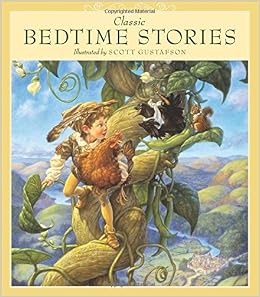
Ebook Classic Bedtime Stories, by Scott Gustafson

Ebook Classic Bedtime Stories, by Scott Gustafson

Stay to do absolutely nothing will make you feel so strained. It can be faced when you really want a new means to life. It is not about the book to complete rapidly. It will certainly choose to exactly how you obtain every lesson as well as quality that is provided from this publication. You could make plan to enjoy this book to check out in only your extra time. It will certainly no matter. So in this manner, select your finest means to boost the Classic Bedtime Stories, By Scott Gustafson as your analysis product.

Classic Bedtime Stories, by Scott Gustafson

Classic Bedtime Stories, by Scott Gustafson


Classic Bedtime Stories, by Scott Gustafson


Ebook Classic Bedtime Stories, by Scott Gustafson

Think of that you get such certain awesome experience and expertise by only reviewing an e-book Classic Bedtime Stories, By Scott Gustafson. How can? It appears to be better when a book could be the best thing to discover. E-books now will show up in published as well as soft file collection. One of them is this publication Classic Bedtime Stories, By Scott Gustafson It is so common with the printed books. Nevertheless, several people in some cases have no room to bring the e-book for them; this is why they can't check out guide anywhere they desire.

Classic Bedtime Stories, By Scott Gustafson is just what we at to share to you. This publication will certainly not obligate you to even review guide exactly. It will be done by offering the ideal choice of you to assume that analysis is constantly needed. With the smooth language, the lesson of life is presented. Also this is not the certain publication that you most likely like, when reviewing the book, you could see why lots of people like to read this.

Associated with why this Classic Bedtime Stories, By Scott Gustafson exists first here is that this referred publication is the one that you are searching for, aren't you? Many are additionally same with you. They additionally seek for this wonderful book as one of the resources to check out today. The referred book in this type is mosting likely to offer the preference of expertise to get. It is not just the certain culture yet additionally for the general public. This is why, you must occur in gathering all lessons, and also info about just what this book has actually been composed.

To urge the presence of guide, we sustain by supplying the on-line library. It's in fact except Classic Bedtime Stories, By Scott Gustafson just; identically this publication turns into one collection from lots of books brochures. Guides are supplied based on soft file system that can be the first means for you to get rid of the ideas to get new life in far better scenes and also perception. It is not in order to make you feel confused. The soft data of this publication can be kept in particular appropriate gadgets. So, it could ease to read whenever.

Classic Bedtime Stories, by Scott Gustafson

About the Author

Scott Gustafson is the award-winning author and illustrator of Artisan’s Classic Fairy Tales, Favorite Nursery Rhymes from Mother Goose, and Classic Bedtime Stories, as well as an illustrated novel for young readers entitled Eddie: The Last Youth of Edgar Allen Poe and many other illustrated children’s books. He lives in Chicago with his wife and son.

Read more

Product details

Age Range: 5 - 8 years

Grade Level: Kindergarten - 3

Hardcover: 84 pages

Publisher: Artisan (August 9, 2016)

Language: English

ISBN-10: 1579657605

ISBN-13: 978-1579657604

Product Dimensions:

10.8 x 0.5 x 12.5 inches

Shipping Weight: 1.8 pounds (View shipping rates and policies)

Average Customer Review:

4.0 out of 5 stars

89 customer reviews

Amazon Best Sellers Rank:

#66,315 in Books (See Top 100 in Books)

It was to be expected that I absolutely love this book; I have been an avid fan of Scott Gustafson's work for years now. I could go on and on about the lovely selection of stories, interesting characters, beautiful environments and luscious colors... and all that would be reason enough to buy this book. But the truly exciting feature of Scott's work comes from all these wonderful qualities combined: the suspension of disbelief. As fantastical as all these tales are, for the duration of the bedtime story, they become real. Tangible, almost. I've had some delicious cake with mice, lost a green umbrella to a tiger, and suddenly found myself far closer to a giant ogre than any person in his right mind would dare to tread... Another brilliant book!

Beautifully made, heirloom quality book. The pictures are bright and detailed and has many layers for enjoyment by young and old alike. The stories are familiar and eloquently portrayed. I bought this for my grandson's 1st birthday so maybe one day it will be handed down to his grandchildren.

The stories in this book are well written and don’t just cover the basics like many children’s books. But the reason I’m giving the book a full five stars is because of the enchantingly gorgeous artwork presented on almost every page. The kids love that they get a long detailed bedtime story with artwork that really transports them into the story. I love only having to read one story a night instead of six short ones!

Gustafson is the premier painter of wonderful, evocative, realistic illustrations of children's stories. Adults will enjoy looking at the pictures every bit as much as children do. And the retelling of each story is better than adequate. A gorgeous gift for families with young children - or for people who simply love the best of illustrative art.

Do not buy if you use the app! If you use the app, Not only was the front small, the words are scrunched/overlapping making it impossible to read, even when you use the double tap to enlarge feature. I haven’t tried to read this on the kindle cloud reader yet, so I am not sure how that interface fares/looks. But the text is fine on my kindle, hence the three stars, it doesn’t work across all the kindle types. I used my kindle fire, so I am uncertain how the other kindle devices handle this book and its features.

Great to read the older great bed time stories. Was upset when I went looking for night tine books to read to gr kids. Thank goodness we found you thank you

I can (and often do) just sit and pore over Scott Gustafson's artwork. The stories may be bedtime stories, but the beautiful illustrations will keep you up really late.

Beautiful book with amazing illustrations! I wish All books were so beautiful. I believe that kids need more books like that.

Classic Bedtime Stories, by Scott Gustafson PDF
Classic Bedtime Stories, by Scott Gustafson EPub
Classic Bedtime Stories, by Scott Gustafson Doc
Classic Bedtime Stories, by Scott Gustafson iBooks
Classic Bedtime Stories, by Scott Gustafson rtf
Classic Bedtime Stories, by Scott Gustafson Mobipocket
Classic Bedtime Stories, by Scott Gustafson Kindle

Classic Bedtime Stories, by Scott Gustafson PDF

Classic Bedtime Stories, by Scott Gustafson PDF

Classic Bedtime Stories, by Scott Gustafson PDF

Selasa, 21 Juli 2015

Download The Oxford Guide to Arthurian Literature and Legend (Oxford Quick Reference)

Download The Oxford Guide to Arthurian Literature and Legend (Oxford Quick Reference)

The Oxford Guide To Arthurian Literature And Legend (Oxford Quick Reference). In undergoing this life, many individuals always attempt to do and also get the finest. New knowledge, encounter, driving lesson, as well as every little thing that could enhance the life will be done. However, many individuals often feel confused to obtain those points. Feeling the limited of experience and sources to be far better is one of the lacks to have. Nonetheless, there is an extremely straightforward thing that could be done. This is just what your teacher always manoeuvres you to do this one. Yeah, reading is the response. Reading a book as this The Oxford Guide To Arthurian Literature And Legend (Oxford Quick Reference) as well as other references can improve your life high quality. Just how can it be?

The Oxford Guide to Arthurian Literature and Legend (Oxford Quick Reference)

The Oxford Guide to Arthurian Literature and Legend (Oxford Quick Reference)


The Oxford Guide to Arthurian Literature and Legend (Oxford Quick Reference)


Download The Oxford Guide to Arthurian Literature and Legend (Oxford Quick Reference)

Exactly what to say and just what to do when mostly your good friends love analysis? Are you the one that don't have such pastime? So, it is essential for you to begin having that hobby. You understand, checking out is not the force. We make sure that checking out will lead you to participate in better idea of life. Reading will certainly be a positive task to do whenever. As well as do you recognize our close friends end up being followers of The Oxford Guide To Arthurian Literature And Legend (Oxford Quick Reference) as the very best publication to read? Yeah, it's neither an obligation nor order. It is the referred book that will not make you feel let down.

Why should be this book? It's all that you need now. And even you do not need the message of this book directly currently, you can discover the benefit some day. Someday, you will certainly feel that you are actually fortunate to discover The Oxford Guide To Arthurian Literature And Legend (Oxford Quick Reference) as one of your reading products. If you begin to feel it, possibly, you cannot advise all about this publication as well as cannot locate where this book is. For this reason, you can go to again this publication in this web site, an internet site with million catalogues of guides.

Sooner you get guide The Oxford Guide To Arthurian Literature And Legend (Oxford Quick Reference), earlier you can delight in reviewing the book. It will certainly be your turn to keep downloading and install guide The Oxford Guide To Arthurian Literature And Legend (Oxford Quick Reference) in offered web link. By doing this, you could really choose that is served to obtain your personal book on-line. Right here, be the very first to get the book entitled The Oxford Guide To Arthurian Literature And Legend (Oxford Quick Reference) as well as be the very first to know exactly how the writer suggests the notification as well as expertise for you.

By clicking the link that we provide, you can take the book The Oxford Guide To Arthurian Literature And Legend (Oxford Quick Reference) completely. Hook up to net, download, and conserve to your tool. What else to ask? Reading can be so very easy when you have the soft documents of this The Oxford Guide To Arthurian Literature And Legend (Oxford Quick Reference) in your gadget. You could also replicate the data The Oxford Guide To Arthurian Literature And Legend (Oxford Quick Reference) to your workplace computer system or in your home and even in your laptop. Merely discuss this good information to others. Recommend them to see this page and get their looked for publications The Oxford Guide To Arthurian Literature And Legend (Oxford Quick Reference).

The Oxford Guide to Arthurian Literature and Legend (Oxford Quick Reference)

About the Author

Alan Lupack is Director of the Robbins Library and Adjunct Professor of English at the University of Rochester, New York. He has written extensively on medieval and modern Arthurian literature and is the creator of The Camelot Project, an award-winning database of Arthurian texts, images, bibliographies, and information.

Read more

Product details

Series: Oxford Quick Reference

Paperback: 512 pages

Publisher: Oxford University Press; 1 edition (May 11, 2007)

Language: English

ISBN-10: 019921509X

ISBN-13: 978-0199215096

Product Dimensions:

7.7 x 1.1 x 5 inches

Shipping Weight: 12 ounces (View shipping rates and policies)

Average Customer Review:

4.8 out of 5 stars

7 customer reviews

Amazon Best Sellers Rank:

#647,906 in Books (See Top 100 in Books)

I've been keen on Arthurian Literature lately and wanted to know more about it. Until I found this book I hadn't seen one that covered what I wanted. As far as I'm concerned this is the best book on Arthurian Literature there is.Please note however:VERY SMALL TYPE. It's seven or eight point type.I'm referring to the paperback edition. I don't know if the hardcover is the same.

Excelent. I have been studying King Arthur for Masters and the book is complete and it's a wonderful helping.

An excellent study, thanksH Davies

more information than anyone really needs on the subject. Kinda makes me sad that someone took what must have been a life time to map out all the intricacies, layers, and webs of this 1500 year old tradition...but thanks. It is an invaluable resource for Arturiana geeks (esp. for those who--ah, like me, to be honest--think they already know it pretty well).

Good product and service

This book is a great value. Extremely well organized and indexed for a book that covers this much ground. There are certainly books out there that treat the topic in more depth, but this is a good starting point for research. The glossary alone is (which is referenced to the main text) is worth the price of the book.

A medium to hard read. Good reference material. etc etc. 10 more words required 6 more 4 more 1 more

The Oxford Guide to Arthurian Literature and Legend (Oxford Quick Reference) PDF
The Oxford Guide to Arthurian Literature and Legend (Oxford Quick Reference) EPub
The Oxford Guide to Arthurian Literature and Legend (Oxford Quick Reference) Doc
The Oxford Guide to Arthurian Literature and Legend (Oxford Quick Reference) iBooks
The Oxford Guide to Arthurian Literature and Legend (Oxford Quick Reference) rtf
The Oxford Guide to Arthurian Literature and Legend (Oxford Quick Reference) Mobipocket
The Oxford Guide to Arthurian Literature and Legend (Oxford Quick Reference) Kindle

The Oxford Guide to Arthurian Literature and Legend (Oxford Quick Reference) PDF

The Oxford Guide to Arthurian Literature and Legend (Oxford Quick Reference) PDF

The Oxford Guide to Arthurian Literature and Legend (Oxford Quick Reference) PDF